How Social Media’s “Invasion of the Idiots” Eroded Expertise and Fueled the Modern Misinformation Crisis
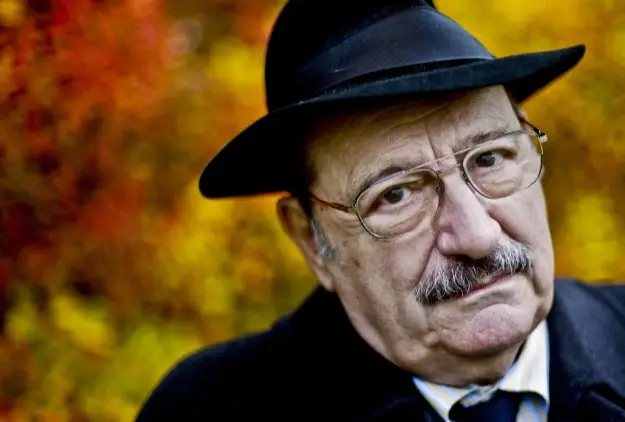
- Umberto Eco, bestselling author of The Name of the Rose, issued a blunt critique of social media during a 2015 honorary degree ceremony at the University of Turin.
- He described platforms as granting “legions of imbeciles” the same public voice once reserved for Nobel laureates and scholars.
- Nine months later, the 84-year-old philosopher died—before witnessing how completely his prediction would define the digital age.
Umberto Eco spent decades decoding how societies create meaning.
A medievalist, semiotician, and novelist whose debut fiction sold more than 50 million copies worldwide, he understood signs, symbols, and the fragile machinery of truth better than almost anyone.
In June 2015, after receiving an honorary doctorate in Communication and Media Culture from the University of Turin, the 83-year-old Eco stepped into the Aula Magna and delivered a remark that would echo for years.
Speaking to journalists, he said the internet had removed every traditional gatekeeper.
“Social media gives the right to speak to legions of imbeciles who previously spoke only at the bar after a glass of wine, without harming the community,” he told La Stampa.
“They were promptly silenced, but now they have the same right to speak as a Nobel Prize winner. It’s the invasion of the idiots.”
The phrase detonated. Critics called him elitist. Others accused him of nostalgia for a time when only the credentialed could be heard.
Yet Eco was not attacking free speech. He was mourning the collapse of filters that once forced ideas to survive scrutiny.
For centuries those filters existed—editors, peer review, fact-checking desks, university tenure committees, even the simple economics of printing.
They were imperfect, often exclusionary, but they imposed a cost on falsehood. A medical claim required evidence.
A historical assertion demanded sources. A conspiracy needed more than conviction.
The web erased that cost. A teenager in a bedroom could reach millions with the same ease as a tenured professor.
A conspiracy theorist could outpace a journalist who had spent months verifying facts. Algorithms did not reward accuracy; they rewarded engagement.
Nuance rarely went viral. Certainty, outrage, and absolute declarations did.
Eco had watched the pattern form long before most recognized it. Flat-Earth groups coalesced online.
Anti-vaccine narratives outran public-health campaigns. Political falsehoods disproven within hours became entrenched “alternative facts.”
Climate scientists with decades of data found themselves shouted down by bloggers who had “done their own research.”
The phrase itself—“do your own research”—became code for rejecting institutional knowledge in favor of whatever confirmed preexisting belief.
He saw the deeper danger clearly. Giving everyone a voice is democracy’s promise. Treating every voice as equally authoritative is democracy’s peril.
On a feed, a peer-reviewed study from NASA sits beside an influencer’s wellness product pitch with identical formatting, identical algorithmic boost, identical apparent legitimacy.
Platforms do not label sources. They simply serve content and let users decide—which, in practice, means most users do not decide at all.
Eco understood the distinction between the right to speak and the right to be believed.
A relative’s Facebook post about vaccines is not equivalent to a randomized controlled trial.
A viral video claiming election fraud is not the same as audited vote tallies. Yet online, they appear indistinguishable.
He called this the “invasion of the idiots” not because ordinary people lack intelligence, but because the system now amplifies confidence over competence, volume over verification.
The loudest, most certain voices win the attention economy. Thoughtful uncertainty loses.
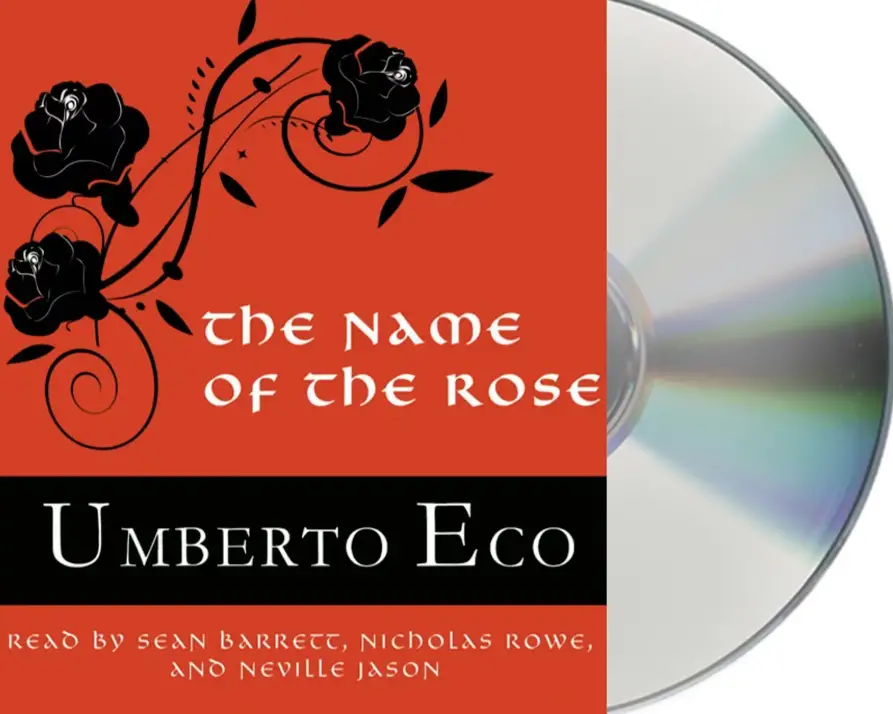
Eco’s own career illustrated the very standards he feared were vanishing. His 1980 novel fused medieval theology, semiotics, and detective fiction into a dense, demanding bestseller.
Readers wrestled with pages of Latin and monastic history, yet the book became a global phenomenon, later adapted into a 1986 film starring Sean Connery.
His follow-up, Foucault’s Pendulum (1988), dissected conspiracy thinking itself—only to watch real-world conspiracism explode in the decades that followed.
He published essays, children’s books, translations, and twice-monthly columns in L’Espresso until weeks before his death.
He held honorary degrees from more than thirty institutions. Yet none of that pedigree protected ideas from being flattened online.
Eco did not live to see the full confirmation of his warning. He missed the global pandemic in which social-media misinformation demonstrably increased mortality.
He missed the surge of election-denial claims that persisted despite repeated legal and forensic rebuttals.
He missed deepfake videos and state-sponsored bot armies turning platforms into weapons of mass distraction.
What he left behind was a question that grows more urgent each year: When every opinion appears equally valid, how does a society still distinguish knowledge from noise?
He never called for censorship. He called for renewed respect for the labor of expertise—for the years of study, the peer review, the journalistic verification, the quiet humility of admitting what one does not know.
He reminded us that while everyone may now speak, not every claim deserves belief.
In an age when algorithms reward certainty and outrage, intellectual honesty has become an act of quiet rebellion.
Admitting complexity, seeking primary sources, changing one’s mind in the face of evidence—these once-routine habits now feel almost subversive.
Umberto Eco spent a lifetime studying how meaning is made and shared. He watched the digital revolution dismantle the old structures of authority and replace them with something faster, louder, and far less accountable.
His 2015 warning was not bitterness. It was an act of care—for knowledge, for public discourse, and for the possibility that reason might still outlast tribal noise.
We are living inside the world he described. The question he left hanging in the air that June afternoon in Turin has only grown louder.
What are we going to do about it?